Contents:
- The Real Reasons Your Potted Flowers Are Struggling
- Watering: The Most Common Culprit
- Drainage That Doesn’t Actually Drain
- Why Container Flowers Die Fast in Summer Heat
- The Right Plant for the Right Spot
- Soil and Nutrition Problems That Sneak Up on You
- Fertilizer: Too Little, Too Late, or Too Much
- Container Flowers Dying Fast: Pests and Disease You Might Be Missing
- Root Bound Plants Run Out of Resources
- Sustainable Practices That Also Help Your Flowers Thrive
- Practical Checklist Before You Buy Another Plant
- FAQ: Container Flowers Dying Fast
- Why do my potted flowers die so quickly after I buy them?
- How often should I water container flowers in summer?
- Can too much sun kill container flowers?
- What is the best potting mix for container flowers?
- Should I fertilize container flowers every week?
- Stop Losing Plants — Start Diagnosing
You planted them with such optimism. Bright petals, lush foliage, that satisfying moment when you set the pot on the porch and stepped back to admire it. Two weeks later? Yellowing leaves, drooping stems, flowers that look like they’ve given up entirely. If your container flowers are dying fast, you’re not alone — and more importantly, you’re probably not doing anything catastrophically wrong. The answer is almost always hiding in one of a handful of very fixable problems.
Container gardening is deceptively tricky. Unlike plants in the ground, potted flowers live in a controlled, confined environment where every variable — water, nutrients, light, drainage — is entirely up to you. There’s no soil ecosystem to buffer your mistakes. That’s the challenge. But it’s also what makes containers so satisfying once you crack the code.
The Real Reasons Your Potted Flowers Are Struggling
Before you blame the plant or the weather, consider the container itself. Most problems with potted flowers trace back to a few core issues that compound each other quickly in the confined space of a pot.
Watering: The Most Common Culprit
Overwatering kills more container plants than drought does. It sounds counterintuitive, but soggy soil suffocates roots by cutting off oxygen. Roots sitting in waterlogged conditions for even 48 hours can begin to rot, and by the time leaves start yellowing, the damage is often already significant.
The other side of the coin — underwatering — creates stress that manifests as wilting, crispy edges, and rapid flower drop. In peak summer heat, a 12-inch pot filled with blooming annuals may need water once or even twice a day.
The fix: stick your finger 2 inches into the soil. If it feels dry at that depth, water thoroughly until it drains from the bottom. If it still feels moist, wait. Simple, but most gardeners skip this step.
Drainage That Doesn’t Actually Drain
A pot with a drainage hole means nothing if the hole is blocked, the pot is sitting in a saucer full of standing water, or the potting mix has compacted into a dense, water-resistant mass. Terra cotta pots are forgiving because they’re porous — glazed ceramic and plastic retain moisture much longer, which changes how often you need to water.
Check your saucers. If water is pooling there after rain or irrigation, roots are essentially soaking in it. Empty saucers within 30 minutes of watering as a standard practice.
Why Container Flowers Die Fast in Summer Heat
Heat accelerates everything — evaporation, transpiration, nutrient uptake, stress responses. A container sitting on a south-facing concrete patio in July can have soil temperatures 20°F higher than air temperature. At those temps, roots struggle to function even when moisture is present.
Dark-colored pots absorb and radiate heat aggressively. Switching to light-colored, insulated, or double-walled containers can meaningfully reduce root zone temperature. Alternatively, grouping pots together creates a microclimate where the foliage shades neighboring containers, lowering soil temps by several degrees.
The Right Plant for the Right Spot
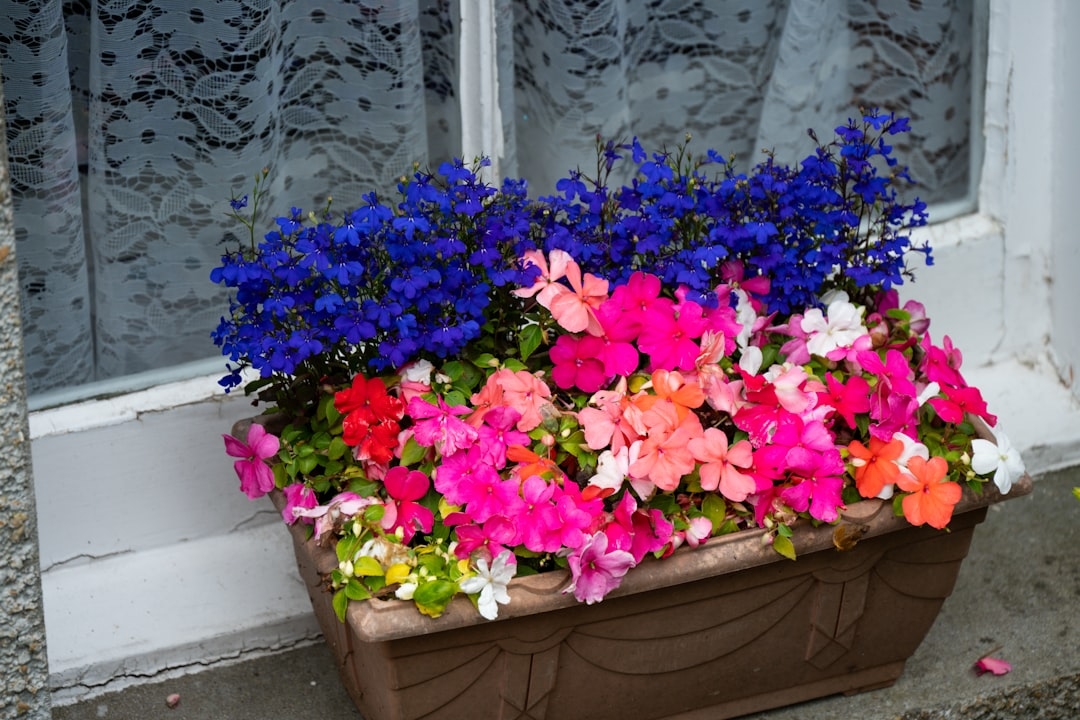
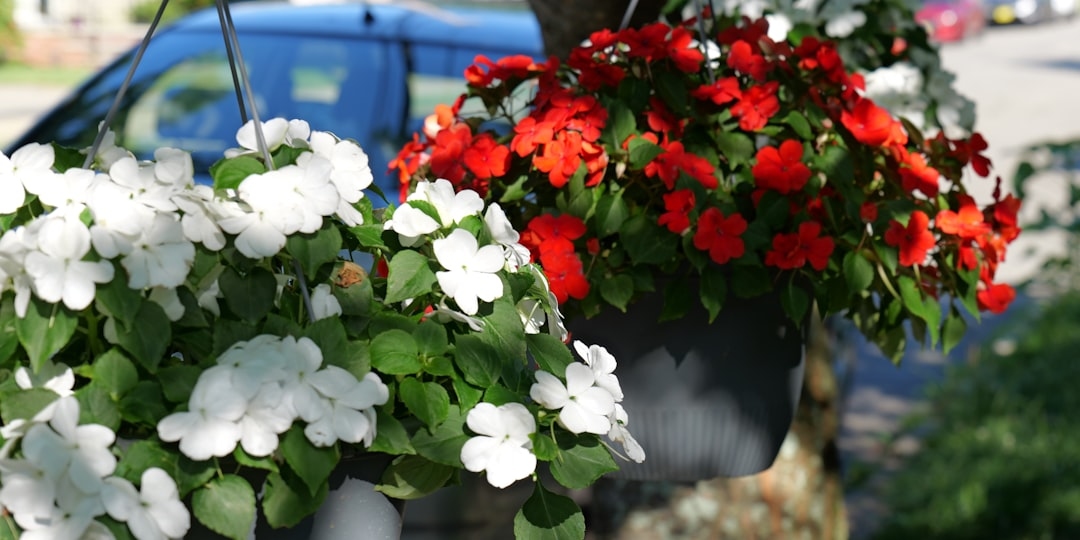
Petunias, lantana, and portulaca thrive in full sun. Impatiens and begonias flame out in it. Placing shade-lovers in six-plus hours of direct sun is a fast track to scorched, dying flowers regardless of how well you water. Before purchasing, check the tag for light requirements and match them precisely to your specific growing location — not just your general yard.
Soil and Nutrition Problems That Sneak Up on You
Potting mix is not garden soil, and it’s not forever. Standard potting mixes are lightweight and airy when fresh, but they break down over time. After a season or two, the structure collapses, drainage slows, and the mix becomes hydrophobic — it actually repels water rather than absorbing it. You’ll notice this when water runs straight through the pot during irrigation instead of soaking in evenly.
Fresh, high-quality potting mix runs about $10–$18 per 2-cubic-foot bag. Replacing the mix in a 14-inch pot each season costs roughly $5–$8 in materials and takes ten minutes. That investment prevents a cascade of problems that no amount of fertilizer can fix.
Fertilizer: Too Little, Too Late, or Too Much
Container plants are heavy feeders. Unlike in-ground plants with access to a broad soil ecosystem, potted flowers rely entirely on what you provide. Regular watering also flushes nutrients out of the pot faster than you’d expect — studies on container horticulture suggest that up to 40% of soluble nutrients can leach out within the first few weeks of planting.
A slow-release granular fertilizer at planting (like Osmocote 14-14-14, applied at label rates) combined with a liquid bloom booster every two weeks during the growing season is a reliable baseline. Signs of nitrogen deficiency — pale, yellowing older leaves — often get misread as a watering problem and go untreated until plants are in serious decline.
Container Flowers Dying Fast: Pests and Disease You Might Be Missing
Spider mites thrive in hot, dry conditions and can devastate a pot of flowers in under a week. They’re tiny — almost invisible — but the damage they leave behind is distinctive: a fine stippling or bronzing on leaf surfaces, sometimes with fine webbing at leaf joints. Aphids cluster on new growth and under leaves, sucking sap and transmitting viruses. Fungus gnats signal overwatering and attack roots.
Get in the habit of flipping leaves during your watering routine. Catching an infestation early — when you can still treat with insecticidal soap or neem oil — is the difference between a minor setback and losing the plant. Neem oil, which is also biodegradable and far gentler on beneficial insects than synthetic pesticides, handles a wide range of common container pests effectively.
Root Bound Plants Run Out of Resources
A plant that has completely filled its pot with roots has nowhere left to grow. It runs through available water and nutrients faster, flowers decline in quality, and the whole plant looks stressed. If roots are visibly circling the bottom of the pot or pushing out of drainage holes, the plant needs either a pot that’s 2–4 inches larger in diameter or a fresh division into multiple containers.
Sustainable Practices That Also Help Your Flowers Thrive
Eco-friendly container gardening isn’t just good for the planet — it often produces healthier plants. Self-watering planters with built-in reservoirs reduce water use by up to 50% compared to conventional pots while keeping moisture levels far more consistent. Consistency is what container flowers want most.
Composting spent potting mix rather than trashing it, using peat-free mixes made from coir (coconut fiber) or wood fiber, and choosing terracotta or recycled-plastic containers over single-use plastic all reduce environmental impact without costing more — and in some cases, coir-based mixes offer superior drainage properties that actually benefit plant health. Coconut coir is a byproduct of the coconut industry, making it a genuinely renewable resource.
Collecting rainwater in a small barrel — a basic setup costs around $30–$80 — provides soft, unchlorinated water that many flowering plants respond to better than tap water. Chlorine and fluoride additives in municipal water aren’t lethal to most flowers, but sensitive varieties like geraniums and marigolds show noticeably better color and vigor with rainwater over time.
Practical Checklist Before You Buy Another Plant
- Pot size matters: Most annual flowers need a minimum 10–12 inch pot. Larger is almost always better.
- Fresh mix every season: Don’t reuse old, compacted potting soil without amending it with 30% fresh compost or perlite.
- Match light requirements precisely: Full sun means 6+ hours of direct sun. Part shade means 3–4 hours. Be honest about what your spot actually gets.
- Water by feel, not schedule: Check soil moisture manually before every watering, especially in fluctuating weather.
- Feed consistently: Set a phone reminder to apply liquid fertilizer every 14 days during the growing season.
- Deadhead regularly: Removing spent blooms redirects energy from seed production to new flower development, extending the display by weeks.
FAQ: Container Flowers Dying Fast
Why do my potted flowers die so quickly after I buy them?
Most newly purchased flowers die fast due to transplant shock combined with a sudden change in growing conditions — different light, temperature, or watering frequency than the greenhouse they came from. Give new plants a few days to acclimate in a sheltered spot before placing them in full sun or extreme conditions, and water gently during the adjustment period.
How often should I water container flowers in summer?
In hot summer weather (above 85°F), most container flowers need watering once a day, and small pots or hanging baskets may need water twice daily. Always check soil moisture 2 inches deep before watering rather than relying on a fixed schedule.
Can too much sun kill container flowers?
Yes. Shade-loving varieties like impatiens, fuchsia, and tuberous begonias will wilt, bleach, and eventually die in more than 3–4 hours of direct afternoon sun. Even sun-tolerant varieties can suffer when pots overheat on reflective surfaces like concrete or metal decking.
What is the best potting mix for container flowers?
A high-quality, well-draining potting mix — not garden soil — is essential. Look for mixes containing perlite or bark for drainage. Coir-based, peat-free mixes are increasingly popular for their sustainability and consistent moisture retention. Refresh or replace the mix every one to two growing seasons.
Should I fertilize container flowers every week?
Every two weeks is the standard recommendation for most flowering annuals using a balanced liquid fertilizer like 10-10-10 or a high-phosphorus bloom formula. Weekly feeding can work with very diluted concentrations, but over-fertilizing causes salt buildup that burns roots and accelerates decline.
Stop Losing Plants — Start Diagnosing
The good news buried in all of this: container flowers dying fast is almost always a systems problem, not a plant problem. Change the system — the watering habits, the soil quality, the pot size, the fertilizer routine — and the results change with it. Start by diagnosing just one variable at a time. Check drainage this week. Adjust watering frequency next. Add a feeding schedule after that.
Keep a simple garden journal — even a few notes on your phone — tracking what you planted, where, and how it performed. Over two or three seasons, patterns emerge that are specific to your climate, your patio, your water source. That localized knowledge is worth more than any general advice. Your container garden can be genuinely stunning. It just needs you to pay attention to the right things.