Contents:
- Why Seasonality Still Matters for Winter Flowers
- December Flowers in Season: A Month-by-Month Context
- The Star Players: Best Flowers Available in December
- Amaryllis
- Paperwhite Narcissus
- Hellebore (Lenten Rose)
- Poinsettia
- Camellia
- Holly and Seasonal Berries
- Regional Differences: What’s Growing Where in December
- Practical Tips for Buying and Arranging December Flowers
- FAQ: December Flowers in Season
- What flowers bloom naturally in December in the US?
- What is the most popular flower in December?
- Are roses in season in December?
- What flowers are good for December wedding arrangements?
- How do I keep December flowers fresh longer?
- Start Small, Then Grow Your December Flower Knowledge
Long before poinsettias lined every grocery store checkout in America, the ancient Romans were already celebrating December with flowers. During Saturnalia — their boisterous winter festival held each December 17th through 23rd — revelers decorated their homes with holly, ivy, and evergreen branches to honor Saturn and signal that warmth and life would return. They understood something we sometimes forget: December is not a dead month for flowers. It just asks you to look a little differently.
If you’ve ever stood in a florist shop in December wondering what’s actually fresh versus what was shipped from a greenhouse six states away, this guide is for you. December flowers in season are more plentiful and varied than most people realize — and knowing which ones to reach for can save you money, guarantee freshness, and make your arrangements look genuinely intentional rather than last-minute.
Why Seasonality Still Matters for Winter Flowers
Modern floral supply chains can put a tulip in a Chicago vase in February. So why does seasonality still matter? Simple: freshness, cost, and environmental footprint. Flowers that are naturally in season in December require far less energy to produce and transport. A bloom grown in sync with its natural cycle will typically last 30–50% longer in a vase than one that’s been forced or cold-stored for weeks.
December sits in USDA Hardiness Zones 8–11 as a period of mild growth, meaning gardeners in those zones — think coastal California, the Gulf Coast, and parts of the Pacific Northwest — can still coax blooms from the ground. Everyone else is working largely with greenhouse-grown or imported varieties. That regional difference shapes everything about what you’ll find in local markets versus big-box stores.
December Flowers in Season: A Month-by-Month Context
Think of the flower calendar in quarters. Spring (March–May) brings tulips, peonies, and lilacs. Summer (June–August) delivers sunflowers, dahlias, and zinnias. Fall (September–November) is for chrysanthemums, marigolds, and cosmos. Then comes December — and it’s the season of structured, dramatic, often fragrant blooms that hold up beautifully in heated indoor spaces.
Here’s a quick seasonal reference for winter flowers peaking in December:
- Early December: Paperwhites (narcissus), amaryllis, and hellebores begin opening
- Mid-December: Poinsettias at peak, forced hyacinths available, Christmas cactus blooms
- Late December: Camellias hit full stride in warmer zones; dried arrangements using winter berries peak
The Star Players: Best Flowers Available in December
Amaryllis
Amaryllis is December’s showstopper. A single stem can reach 18–24 inches tall and produce blooms up to 10 inches across. Available in deep red, salmon, white, striped, and even peachy-pink varieties, it’s one of the most structurally dramatic flowers you can work with. Bulbs planted in late October or early November bloom right on cue for December and January. As a cut flower, amaryllis stems last 7–14 days when kept in 2–3 inches of water (not more — the hollow stems rot quickly if submerged too deep).
Paperwhite Narcissus
Paperwhites are the beginner’s flower. Drop the bulbs in a shallow dish with pebbles and water, and within 3–4 weeks you have clusters of small white star-shaped blooms with an intense, sweet fragrance. They’re reliably available at garden centers, Trader Joe’s, and florists from November through January. One note: the scent is polarizing. Some people love it; others find it overwhelming. Place them in a large room or near a window rather than a small bathroom.
Hellebore (Lenten Rose)
Hellebores bloom in winter and early spring, making them rare among perennials. They thrive in Zones 4–9 and produce nodding, cup-shaped flowers in dusty mauve, cream, deep plum, and speckled white. In mild-winter regions like the Pacific Northwest or Mid-Atlantic, they can bloom outdoors in December. As cut flowers they’re trickier — sear the stem ends in boiling water for 30 seconds immediately after cutting to help them drink properly. Expect 5–7 days of vase life when conditioned this way.
Poinsettia
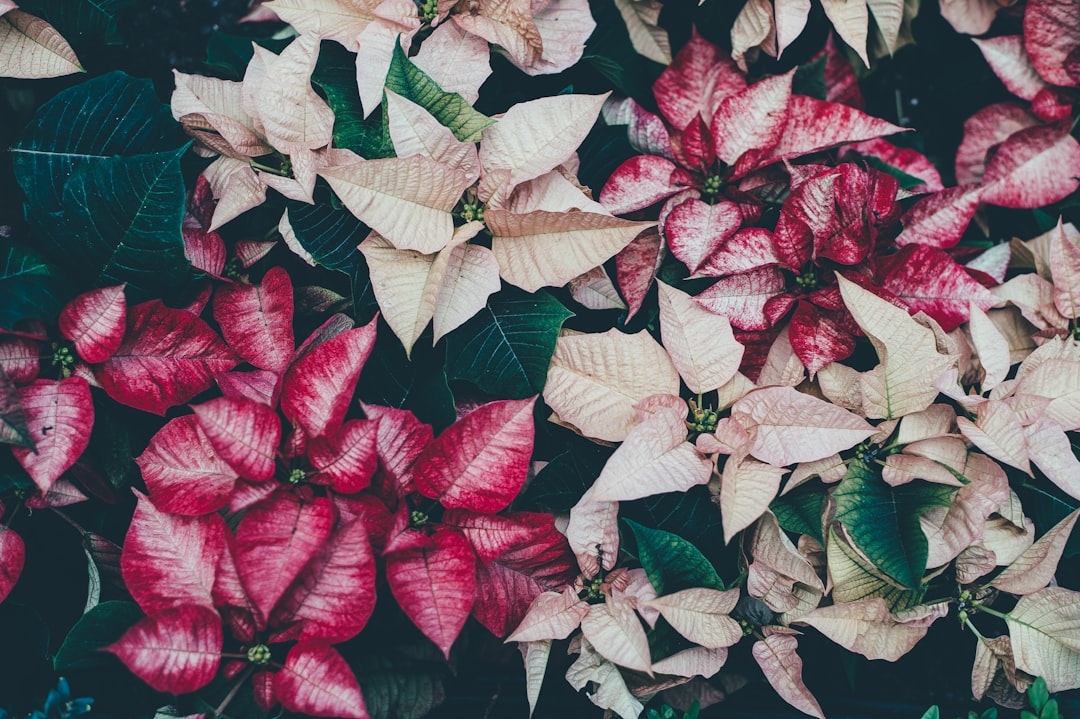
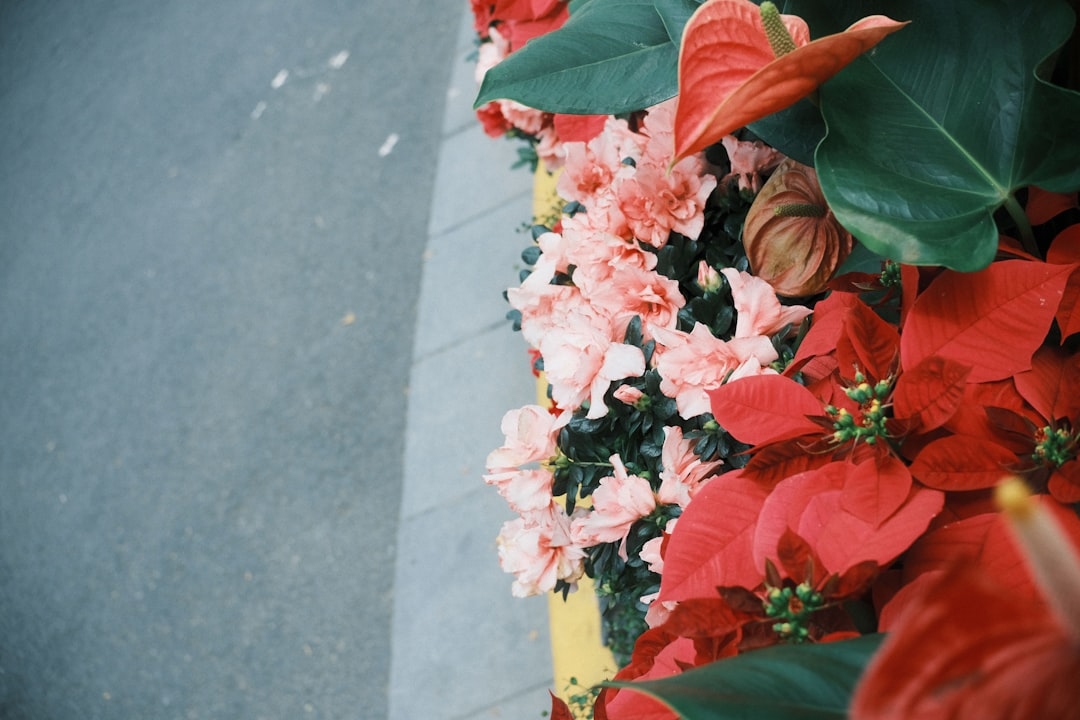
Technically a flowering shrub rather than a cut flower, poinsettias are everywhere in December for good reason. They’re native to Mexico and thrive in short-day conditions — exactly what December provides. The “flowers” are actually colored bracts (modified leaves); the true flowers are the tiny yellow clusters in the center. Keep them away from drafts, water only when the soil is dry an inch down, and they’ll hold their color for 4–6 weeks. Red is classic, but white, burgundy, and marbled varieties are worth seeking out at specialty nurseries.
Camellia
In the American South — particularly Georgia, South Carolina, and Mississippi — camellias are December’s outdoor gift. Some varieties like Camellia sasanqua bloom from October through December, while Camellia japonica peaks January through March. The blooms resemble roses and range from pure white to deep crimson. If you’re in the Northeast or Midwest, you won’t find these at local outdoor gardens, but specialty florists and wholesale markets often carry them as cut flowers shipped from southern growers.
Holly and Seasonal Berries
Not every December arrangement needs a traditional flower at its center. Holly branches with bright red berries, winterberry (a native American holly that drops its leaves and leaves just clusters of red berries on bare branches), and rosehips are all peaking in December. Winterberry is one of the best-kept secrets in winter floristry — a single bunch runs $8–$15 and adds more visual impact per dollar than almost any other winter element.
Regional Differences: What’s Growing Where in December
Geography reshapes your December flower options significantly. Here’s how the US breaks down:
- Northeast (Zones 5–6): Outdoor blooms are essentially done by November. December florals come from greenhouses, florists sourcing from Holland or Colombia, or forced bulbs. Focus on amaryllis, paperwhites, and dried/berry arrangements.
- Southeast (Zones 7–9): Camellias, pansies, and snapdragons can still bloom outdoors. Gardeners in Atlanta or Charlotte may have fresh-cut material from their own yards well into December.
- Pacific Northwest (Zones 8–9): Mild, rainy Decembers mean hellebores, winter jasmine, and even some late-season roses are still producing. Portland and Seattle florists often have local product well into December.
- Southwest / Southern California (Zones 9–11): December is peak growing season for many plants. Ranunculus, stock, and snapdragons are starting their winter-spring cycle. Local farmers’ markets in San Diego and Los Angeles may have fresh California-grown blooms year-round.
Practical Tips for Buying and Arranging December Flowers
A few concrete recommendations before you shop:
- Buy from a local florist, not a grocery store, for special occasions. Grocery store flowers are often 5–7 days old before they hit the shelf. A local florist receives fresh stock 2–3 times per week.
- Ask about origin. Flowers labeled “domestic” in December likely come from California or Florida. Imported flowers — common in winter — arrive primarily from Colombia, Ecuador, and the Netherlands. Both can be high quality, but domestic flowers typically travel shorter distances and arrive fresher.
- Recut stems at a 45-degree angle under running water immediately before placing in a vase. This single step makes a bigger difference than any floral preservative packet.
- Keep arrangements away from fruit bowls. Ripening fruit releases ethylene gas, which accelerates flower aging. Even a few bananas nearby can shorten vase life by 2–3 days.
- Budget realistically. A small amaryllis arrangement (3 stems, simple greenery) runs $35–$55 at a florist. A fuller holiday centerpiece with mixed textures and berries typically costs $75–$120. Knowing this prevents sticker shock and helps you plan.
FAQ: December Flowers in Season
What flowers bloom naturally in December in the US?
In warmer regions (Zones 8–11), camellias, pansies, snapdragons, and winter jasmine bloom naturally outdoors in December. In cooler zones, paperwhites and amaryllis are forced indoors from bulbs, while hellebores may bloom in mild-winter areas like the Pacific Northwest.
What is the most popular flower in December?
Amaryllis and poinsettias are the most popular December flowers in the US market. Amaryllis tops cut flower sales, while poinsettia is the best-selling potted plant in America, with over 70 million sold each year during the holiday season.
Are roses in season in December?
Roses are not naturally in season in December in most of the US, but they’re available year-round because roughly 80% of US cut roses are imported from Colombia and Ecuador. Expect to pay a premium — December roses often cost 20–40% more than the same variety in spring due to Valentine’s Day prep and holiday demand.
What flowers are good for December wedding arrangements?
Amaryllis, white anemones, dusty miller, eucalyptus, hellebores, and winter berries all work beautifully for December weddings. They photograph well against winter light and hold up in cool venue temperatures. Avoid tropical flowers like orchids and birds of paradise in cold churches or barns with fluctuating temperatures.
How do I keep December flowers fresh longer?
Recut stems at a 45-degree angle, change vase water every two days, keep flowers away from heat vents and direct sunlight, and store them in a cool room overnight (around 50–60°F is ideal). For amaryllis specifically, keep only 2–3 inches of water in the vase to prevent stem rot.
Start Small, Then Grow Your December Flower Knowledge
The best way to get comfortable with december flowers in season is to start with one: grab a bulb kit of paperwhites or a single amaryllis stem, watch how it opens over 7–10 days, and pay attention to what it needs. That hands-on experience teaches more than any article can.
Next December, try building a small arrangement yourself — a few amaryllis stems, a handful of winterberries, and a sprig of eucalyptus. Visit a local farmers’ market or florist and ask what just came in. You’ll be surprised how much seasonal variety exists even in the coldest months, and how quickly you develop an eye for what’s genuinely fresh versus what’s been sitting in cold storage since November.
December rewards the curious flower buyer. You just have to know where to look.