Contents:
- The History Behind DC’s Famous Cherry Trees
- When Do Cherry Blossoms Bloom in DC? Exact Dates and Patterns
- How the National Park Service Predicts Peak Bloom
- Best Spots to See the Cherry Blossoms Bloom in DC
- Tidal Basin Access and the Seawall Project
- How to Plan Your Visit: Practical Tips for First-Timers
- The Eco-Friendly Side of Cherry Blossom Season
- Frequently Asked Questions About Cherry Blossoms in DC
- What is the peak bloom date for DC cherry blossoms?
- How long do the cherry blossoms last in Washington DC?
- Are the DC cherry blossoms free to see?
- What type of cherry trees are in Washington DC?
- Can I visit the DC cherry blossoms at night?
- Make Your Trip Count — Before the Petals Fall
Here’s something most visitors don’t realize: the 3,800 cherry trees surrounding Washington DC’s Tidal Basin were a gift from Japan in 1912 — and the original shipment in 1910 had to be burned on arrival because it was infested with insects and disease. The 1912 replacement trees have now been blooming for over a century, making them living monuments to both diplomacy and resilience. If you’re trying to catch the cherry blossoms bloom DC season at its absolute peak, timing is everything — and this guide will tell you exactly how to get it right.
The History Behind DC’s Famous Cherry Trees
The story starts with First Lady Helen Taft and Viscountess Chinda, wife of the Japanese ambassador, who together planted the first two trees near the Tidal Basin on March 27, 1912. That date is still commemorated each year at the National Cherry Blossom Festival’s opening ceremony. Mayor Yukio Ozaki of Tokyo originally proposed the gift, wanting to strengthen the friendship between Japan and the United States.
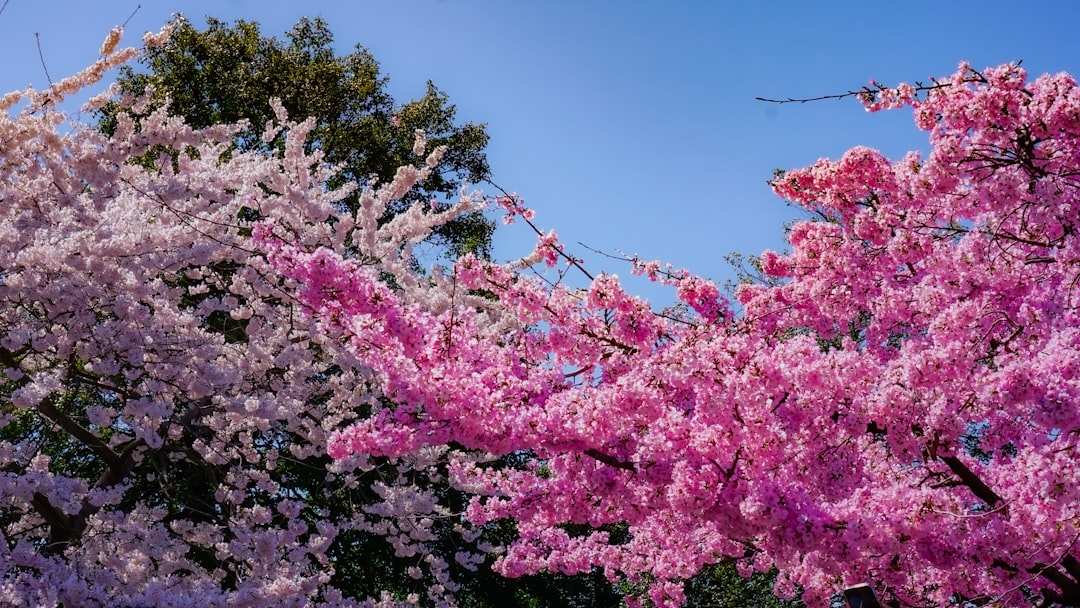
The trees are predominantly Prunus × yedoensis, commonly called the Yoshino cherry. Their blossoms are a delicate pale pink — almost white — with a faint almond-like fragrance. A smaller number of Kwanzan cherry trees bloom a week or two later, with deeper pink, double-petaled flowers that look almost like peonies. Knowing which variety you’re looking at changes the entire timing of your visit.
When Do Cherry Blossoms Bloom in DC? Exact Dates and Patterns
The National Park Service has tracked bloom dates since 1921. Over that long record, peak bloom has ranged from as early as March 15 (in 1990) to as late as April 18 (in 1958). The average peak bloom date is April 4. Climate data from recent decades shows a gradual shift earlier — peak bloom in the 2000s and 2010s averaged roughly 3–5 days earlier than it did in the mid-20th century, a measurable signal of warming spring temperatures.
Here’s the bloom progression to memorize before your trip:
- Green bud stage: Tight green buds, no color yet — usually mid-March
- Florets visible: Small white or pale pink florets appear within the bud scales — late March
- Extension: Florets extend and separate — roughly 1–2 weeks before peak
- Peduncle elongation: Flower stalks lengthen; color becomes visible from a distance
- Full bloom (peak): 70%+ of flowers open — 4–6 days of magic
- Past peak: Petals begin falling; “snow” effect on the ground and water
The past-peak stage has its own beauty. Petals floating across the Tidal Basin — called hanafubuki (“flower blizzard”) in Japanese — is genuinely one of the most photogenic moments of the entire bloom cycle. Don’t write off a trip just because peak has passed.
How the National Park Service Predicts Peak Bloom
The NPS issues its first official forecast in late January or early February, refining it weekly as spring approaches. They track soil temperatures, air temperatures, and the trees’ internal bud development stages. Their predictions are typically accurate within a 2–3 day margin by the time they’re 10 days out. Bookmark nps.gov/subjects/cherryblossom and check it starting February 1 each year.
Best Spots to See the Cherry Blossoms Bloom in DC
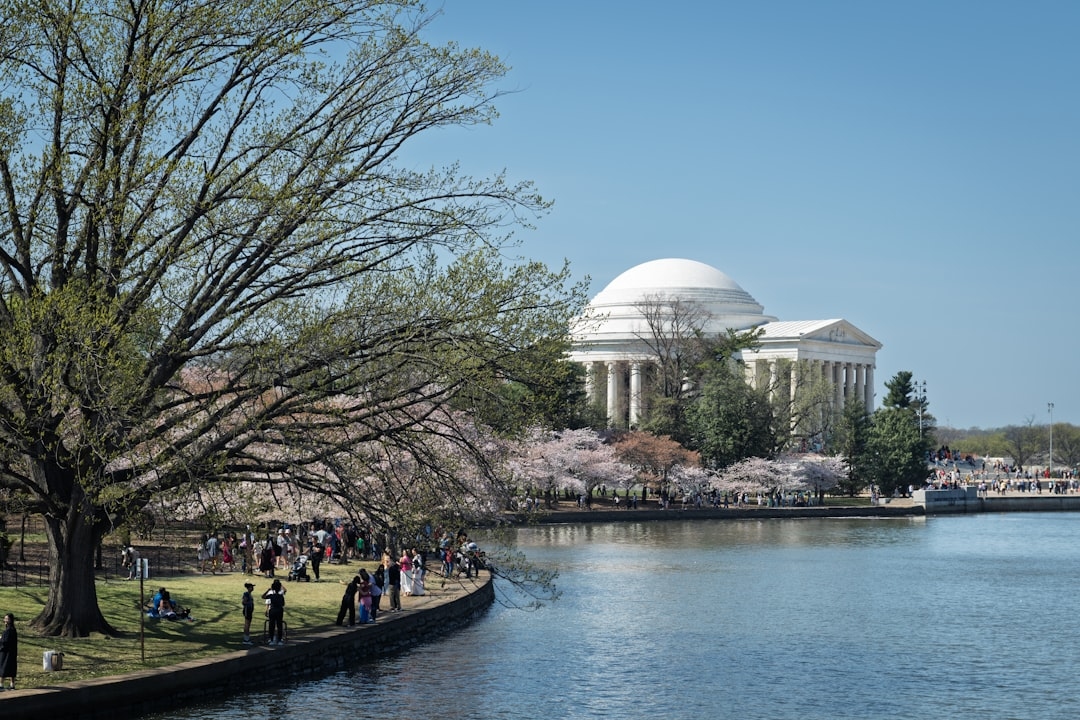
The Tidal Basin is the headline location, and for good reason — nearly 1,700 Yoshino trees ring the 107-acre reservoir, with the Jefferson Memorial as a backdrop. But showing up at 10 a.m. on a Saturday during peak week means competing with tens of thousands of other visitors. Here’s how to spread out and still see something spectacular.
- Tidal Basin (West Potomac Park): The iconic spot. Arrive before 7 a.m. for empty paths and golden-hour light.
- East Potomac Park: Over 1,000 trees here, including the later-blooming Kwanzan cherries. Far fewer crowds. The Hains Point loop is perfect for a relaxed walk or bike ride.
- The National Mall: A smaller grove of Yoshino cherries near the Washington Monument blooms around the same time as the Tidal Basin.
- Kenwood neighborhood, Bethesda MD: Just across the DC line, this residential area has over 1,200 privately owned cherry trees lining its streets. A genuine local secret that feels nothing like the tourist crowds.
- U.S. National Arboretum: Home to rare ornamental cherry varieties most visitors never see. The Arboretum’s collection blooms across a wider window — useful if you’re visiting early or late in the season.
Tidal Basin Access and the Seawall Project
One practical note: the NPS completed a major seawall reconstruction around the Tidal Basin that has improved accessibility along the basin’s perimeter. The project also addressed flooding that used to submerge the walking paths during high-water events — historically a real problem during bloom season. The restored paths make the full 1.9-mile loop around the basin more reliable than it’s been in decades.
How to Plan Your Visit: Practical Tips for First-Timers
Washington DC draws an estimated 1.5 million visitors during the National Cherry Blossom Festival each year, which runs for about three weeks in late March and early April. Crowds peak on weekends closest to peak bloom. A few strategies make the difference between a magical morning and a miserable afternoon stuck in traffic.
- Go early or go late. The Tidal Basin at 6 a.m. is a completely different experience from the same spot at noon. Dusk is also beautiful and less crowded than midday.
- Use Metro, not a car. The Smithsonian station (Orange/Blue/Silver Line) puts you a 10-minute walk from the Tidal Basin. Parking near the Mall during festival weekends is both expensive and nearly impossible.
- Book accommodations 3–4 months early. Hotel rates in DC during peak bloom week can run 40–60% higher than the same room costs in early March. Staying in Arlington or Alexandria and taking Metro in saves real money.
- Watch the weather, not just the date. A warm spell in late March can accelerate the timeline by 5–7 days. A late frost can damage open blossoms overnight. Check both the NPS forecast and the 10-day weather outlook together.
- Bring a wide-angle lens or use portrait mode. The density of the trees makes wide shots stunning; tight portrait shots of individual blooms against blue sky require nothing more than a phone camera with a good portrait mode.
The Eco-Friendly Side of Cherry Blossom Season
The NPS and the National Cherry Blossom Festival have both made meaningful moves toward sustainable events. The festival has implemented a no-single-use-plastics policy at its official events, and the NPS uses an integrated pest management program around the Tidal Basin trees that minimizes chemical inputs. Visitors can participate too: the festival’s Leave No Trace guidelines ask attendees not to break branches, pick blossoms, or climb trees — behaviors that cause real, cumulative damage to century-old specimens.
If you want to take the eco-friendly angle further, consider planting your own ornamental cherry at home. The Yoshino cherry is hardy in USDA Zones 5–8, grows 20–30 feet tall, and blooms reliably for decades. Nurseries across the Mid-Atlantic stock them in early spring for around $50–$120 for a 3-gallon container plant. You won’t match the Tidal Basin, but your backyard in April will be extraordinary.
Frequently Asked Questions About Cherry Blossoms in DC
What is the peak bloom date for DC cherry blossoms?
The average peak bloom date in Washington DC is April 4, based on over 100 years of NPS records. Peak bloom can range from mid-March to mid-April depending on the year’s winter and early spring temperatures. The NPS issues official predictions beginning in late January each year.
How long do the cherry blossoms last in Washington DC?
Peak bloom typically lasts 4 to 6 days under normal conditions. Rain, strong winds, or a sudden temperature increase can shorten this to 2–3 days. Cool, calm weather can extend it to about 10 days. The full bloom period from first color to bare branches spans roughly 2–3 weeks.
Are the DC cherry blossoms free to see?
Yes — the trees around the Tidal Basin, East Potomac Park, and the National Mall are free to visit at any hour. Some National Cherry Blossom Festival ticketed events (concerts, the Blossom Kite Festival, the Petalpalooza event) charge admission, but the trees themselves are always free.
What type of cherry trees are in Washington DC?
About 70% of DC’s cherry trees are Yoshino cherries (Prunus × yedoensis), which produce pale pink to white single blossoms. The remainder include Kwanzan cherries (deep pink double blooms, peak roughly 2 weeks after Yoshino) and several other ornamental varieties at the National Arboretum.
Can I visit the DC cherry blossoms at night?
Absolutely. The Tidal Basin and Jefferson Memorial are illuminated at night, and the blossoms against the lit memorial make for dramatic photographs. The paths around the Tidal Basin are open 24 hours. Night visits during the week near peak bloom are among the least-crowded experiences of the entire festival.
Make Your Trip Count — Before the Petals Fall
Cherry blossom season in DC operates on nature’s schedule, not yours. The single best thing you can do right now — even if your trip is months away — is set a reminder for February 1 to check the NPS forecast, then hold your travel dates loosely enough to shift by a few days when the predictions sharpen. Book refundable hotel rates where possible. Sign up for the National Cherry Blossom Festival’s email alerts. And if you end up visiting a day or two past peak? Walk the Tidal Basin anyway. A path covered in pale pink petals, with blossoms still clinging to every branch overhead, is not a disappointment. It’s a different kind of perfect.