Contents:
- What Makes Peonies Bloom When They Do
- Peony Season by US Region: Exact Bloom Windows
- The South and Mid-Atlantic (Zones 6b–7b)
- The Midwest and Great Plains (Zones 4–6)
- The Northeast (Zones 5–6)
- The Pacific Northwest (Zones 7–8)
- Mountain West (Zones 3–5)
- Herbaceous, Tree, and Itoh Peonies: Do They Bloom at Different Times?
- A Reader’s Lesson Learned the Hard Way
- Common Mistakes to Avoid
- Expert Tip: Buying Cut Peonies at Peak Season
- Extending Your Season: Practical Tips for Gardeners
- Frequently Asked Questions About Peony Season in the US
- When is peony season in the US?
- How long do peonies bloom?
- Why won’t my peonies bloom?
- Can you grow peonies in Southern California or Florida?
- When do farmers markets have the most peonies?
- Plan Now to Catch Peony Season at Its Best
You’re scrolling through Instagram in late April, and suddenly your feed fills with those impossibly lush, ruffled blooms — peonies everywhere. Your neighbor’s garden has them. The farmers market vendor sold out before 9 a.m. You missed it again. Understanding exactly when peony season in the US arrives — and how it varies by region — means you’ll never miss that window again, whether you’re growing your own or hunting for the perfect bouquet.
What Makes Peonies Bloom When They Do
Peonies are perennials governed by a precise biological clock. They require a cold dormancy period — called vernalization — of at least 500 to 1,000 chilling hours below 40°F (4°C) before they’ll set flower buds. Without that cold exposure, the plants leaf out but refuse to bloom. This is why peonies thrive in USDA Hardiness Zones 3 through 8 and struggle in the Deep South or Southern California, where winters are too mild to trigger the necessary dormancy.
Once spring arrives, bloom timing is driven by accumulated heat units, or “growing degree days.” A warm March can pull blooms two weeks earlier than a cold, wet spring. On average, peonies bloom for roughly 7 to 10 days per plant, though a cool spell can extend that window considerably. Gardeners who want a longer display often plant early, mid, and late-season varieties to stretch the show across four to six weeks.
Peony Season by US Region: Exact Bloom Windows
Geography reshapes the peony calendar dramatically. Here’s how the bloom wave typically moves across the country:
The South and Mid-Atlantic (Zones 6b–7b)
Virginia, Tennessee, North Carolina, and similar states see peony blooms as early as late April through mid-May. Gardeners in these areas tend to favor heat-tolerant intersectional (Itoh) hybrids, which handle warmer springs better than traditional herbaceous types. In these zones, afternoon shade is recommended to slow petal drop on hot days.
The Midwest and Great Plains (Zones 4–6)
This is the heartland of American peony culture. States like Iowa, Illinois, Ohio, and Missouri typically peak from mid-May through early June. Michigan, historically a major cut-flower peony producer, sees peak harvest around Memorial Day weekend — which is why the flower has become synonymous with that holiday. Cool nights keep blooms fresh longer here than almost anywhere else in the country.
The Northeast (Zones 5–6)
New England and upstate New York gardeners watch for blooms from late May through mid-June. A late frost in April can delay opening by a week or more. Boston-area farmers market vendors typically have cut peonies in abundance from the last week of May onward.
The Pacific Northwest (Zones 7–8)
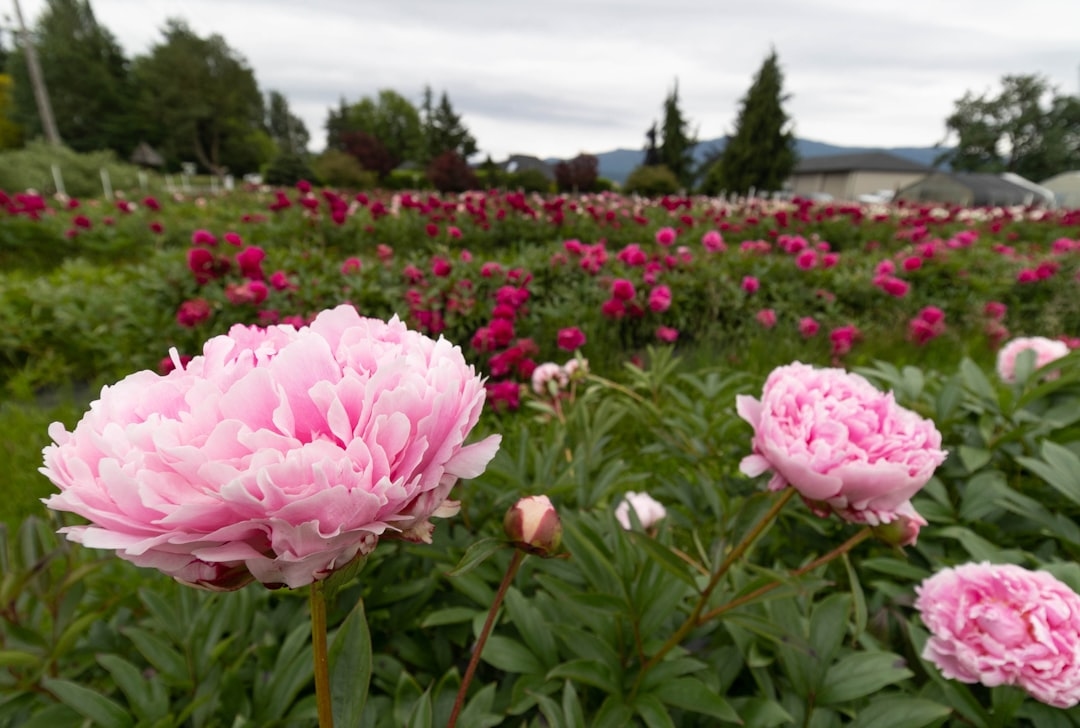
Western Washington and Oregon’s mild, maritime climate produces blooms from mid-May through June, depending on elevation. The cool, overcast springs here are nearly ideal for peonies — blooms often last two weeks on the plant instead of one.
Mountain West (Zones 3–5)
Colorado, Montana, and Idaho gardeners at higher elevations wait until June, sometimes into early July. At 6,000 feet, the compressed growing season means blooms arrive late but can be spectacular. Short-season varieties like ‘Festiva Maxima’ (early-blooming, double white) are particularly well-suited to these climates.
Herbaceous, Tree, and Itoh Peonies: Do They Bloom at Different Times?
The three major peony types don’t follow identical schedules, even in the same garden:
- Tree peonies (Paeonia suffruticosa) bloom first — typically 2 to 4 weeks ahead of herbaceous types, often in April in zones 6 and warmer.
- Herbaceous peonies are the classic garden staple, blooming in May and June depending on zone and variety.
- Itoh (intersectional) hybrids bloom after herbaceous types, extending the season by 2 to 3 weeks into June and early July in many regions.
Planting all three types gives you a potential bloom window of six to eight weeks in a single garden — a strategy professional cut-flower farmers use to maximize their harvest calendar.
A Reader’s Lesson Learned the Hard Way
A gardener in Columbus, Ohio planted six peony bare roots in October — all the same variety, ‘Sarah Bernhardt’, a classic late-season pink. She expected a grand display every May. What she got instead was six plants all opening within four days of each other, then dropping their petals in a single warm weekend. The following fall, she replanted with an early variety (‘Coral Charm’), a mid-season double (‘Festiva Maxima’), and kept two ‘Sarah Bernhardts’ for late season. The next spring, she had blooms from mid-May straight through to the second week of June. Same garden, same effort — just smarter variety selection.
Common Mistakes to Avoid
- Planting too deep. Herbaceous peony eyes (buds) should sit no more than 1 to 2 inches below the soil surface. Deeper planting suppresses blooming — sometimes for years.
- Skipping support. Double-flowered varieties like ‘Mrs. Franklin D. Roosevelt’ can top 5 inches in diameter. Without a cage or ring support installed in early spring, they collapse after the first rain.
- Cutting foliage too early. Leaves fuel next year’s blooms. Wait until after the first hard frost in fall to cut herbaceous peonies back to the ground.
- Blaming ants for bud damage. Ants on peony buds are harmless — they’re feeding on nectar secreted by the buds. They don’t cause botrytis blight or any other damage. The real culprits are excess moisture and poor air circulation.
- Moving mature plants unnecessarily. Established peonies can sulk for 2 to 3 years after transplanting. Choose your location carefully the first time.
Expert Tip: Buying Cut Peonies at Peak Season
“When you’re buying cut peonies, look for buds at the ‘marshmallow stage’ — they feel soft and squishy when you gently squeeze them, but color is showing,” advises Dr. Linda Forsythe, Extension Horticulturist at Michigan State University and certified cut-flower specialist. “Those buds will open beautifully at home in 2 to 3 days. Fully open flowers from the shop look gorgeous on the spot, but you’ll lose half your vase life before you even get them home.”
For US shoppers, peak peony availability at grocery stores and farmers markets typically runs from late April through mid-June, with prices ranging from $4 to $8 per stem at retail and $1.50 to $3.50 per stem when bought by the bunch directly from growers. Prices spike around Mother’s Day (second Sunday in May) — often by 30 to 50 percent — so timing your purchase a week earlier or later pays off.
Extending Your Season: Practical Tips for Gardeners
- Choose varieties strategically. For the Midwest and Northeast, pair ‘Coral Charm’ (early, single coral) with ‘Karl Rosenfield’ (mid, double red) and ‘Dinner Plate’ (late, double pink) for a six-week run.
- Use row cover or shade cloth. A single layer of floating row cover can delay bloom opening by 4 to 5 days — useful if a heat wave threatens to collapse buds prematurely.
- Harvest in the morning. Cut stems when temperatures are coolest and buds are at the marshmallow stage. Place immediately into cold water. Refrigerate at 33–35°F wrapped in plastic for up to 4 weeks for a staggered home display.
- Fertilize at the right time. Apply a low-nitrogen fertilizer (like 5-10-10) when shoots emerge in spring and again after bloom. Avoid high-nitrogen feeds, which promote lush foliage at the expense of flowers.
Frequently Asked Questions About Peony Season in the US
When is peony season in the US?
Peony season in the US runs from late April through early July, depending on region. Southern and Mid-Atlantic states bloom first (late April to mid-May), followed by the Midwest and Northeast (mid-May to mid-June), with Mountain West gardens blooming last (June to early July).
How long do peonies bloom?
Individual peony plants bloom for 7 to 10 days. By planting early, mid, and late-season varieties, gardeners can extend the display in a single garden to four to six weeks.
Why won’t my peonies bloom?
The most common reasons are planting too deep (eyes more than 2 inches below soil), insufficient winter cold (fewer than 500 chilling hours), too much shade (peonies need at least 6 hours of direct sun), or plants that are too young (most take 2 to 3 years to establish before blooming reliably).
Can you grow peonies in Southern California or Florida?
Standard herbaceous peonies are not well-suited to USDA Zones 9 and above due to insufficient winter chill. Some gardeners in mild climates experiment with ‘low-chill’ Itoh hybrids, but results are inconsistent. Tree peonies are a better option in Zone 8b–9a microclimates.
When do farmers markets have the most peonies?
In most US cities, farmers market peony supply peaks around Memorial Day weekend (late May) through the second week of June. Availability is highest in Midwest markets due to the region’s strong commercial peony-growing tradition.
Plan Now to Catch Peony Season at Its Best
The peony season across the US is a rolling wave — if you missed it in Virginia in May, it’s just arriving in Vermont. Mark your regional bloom window on the calendar now, source your bare roots this fall (September through October is the ideal planting window), and select at least three varieties spanning early, mid, and late seasons. Do that once, and you’ll stop being the person who missed it. You’ll be the one selling out at 9 a.m.