Contents:
- What Makes Japanese Beetles So Destructive on Roses
- Japanese Beetles vs. Rose Chafers: Don’t Mix Them Up
- The Grub Problem Underneath Your Lawn
- Practical Control Methods That Actually Work
- Hand-Picking: Low-Tech but Effective
- Neem Oil Sprays
- Kaolin Clay Barriers
- Targeted Insecticides
- Biological Controls for the Long Game
- Avoid Pheromone Traps Near Your Roses
- Eco-Friendly Prevention Strategies
- Frequently Asked Questions
- Why do Japanese beetles prefer roses over other plants?
- How long does Japanese beetle season last?
- Do Japanese beetles kill roses?
- Are Japanese beetle traps worth using?
- What kills Japanese beetles on roses fast?
Your roses looked perfect two weeks ago. Now the leaves are skeletonized, the blooms are chewed to nothing, and there’s a pile of shiny beetles doing exactly what they please. Japanese beetles are one of the most destructive garden pests in the eastern United States — and roses are their favorite target. Understanding why they zero in on your plants is the first step to actually stopping them.
What Makes Japanese Beetles So Destructive on Roses
Japanese beetles (Popillia japonica) were accidentally introduced to the US from Japan around 1916, discovered near a nursery in Riverton, New Jersey. With no natural predators to keep populations in check, they spread aggressively. Today they’re established across most of the eastern US and have been spotted as far west as Colorado and Nebraska.
Adult beetles feed on over 300 plant species, but they have clear preferences. Roses rank at the top of the list — specifically the flowers and soft leaf tissue. The beetles release aggregation pheromones while feeding, which is why you’ll often find 20 or 30 beetles clustered on a single bloom while the plant next to it has none. One beetle essentially sends a dinner invitation to every beetle within range.
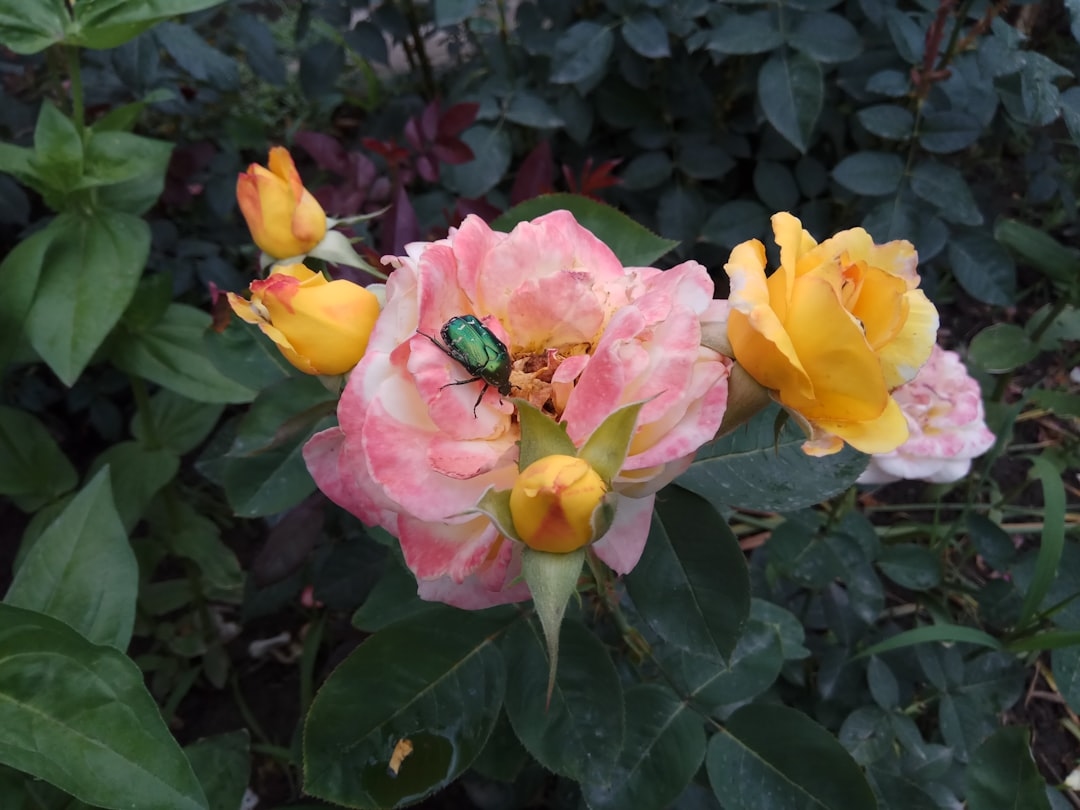
The damage is distinctive. They eat the tissue between leaf veins, leaving a lacy, see-through skeleton. Flowers get chewed from the inside out, starting with petals and working toward the center. A single cluster of beetles can reduce a rose bloom to brown mush within 24 hours.
Japanese Beetles vs. Rose Chafers: Don’t Mix Them Up
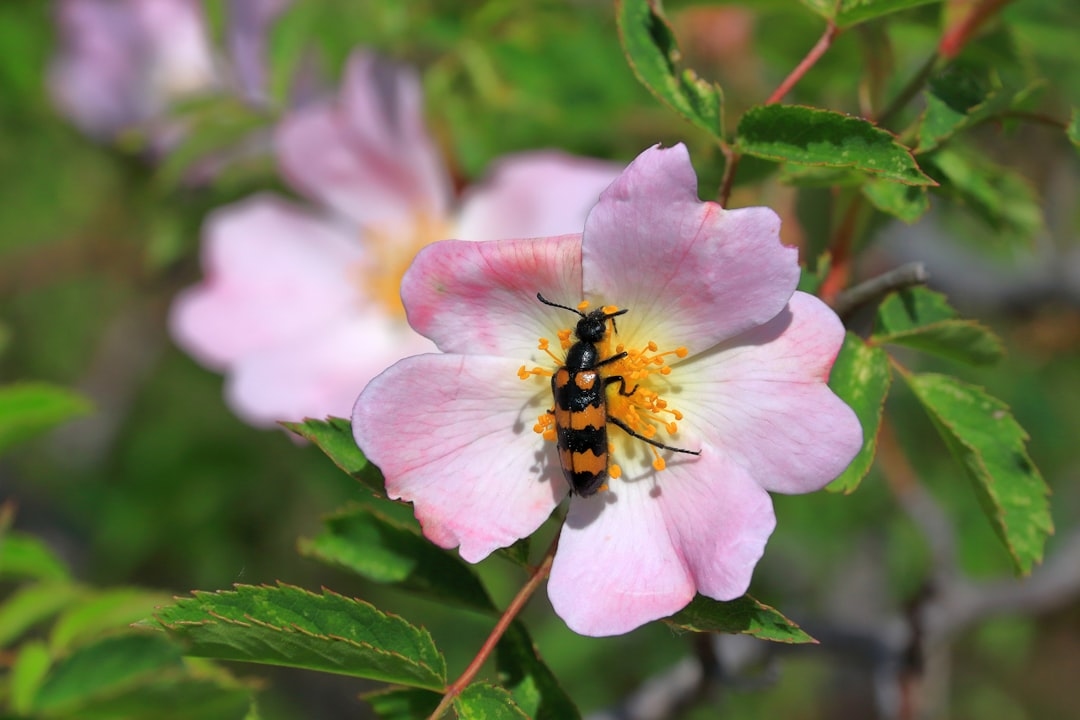
A lot of gardeners confuse Japanese beetles with rose chafers (Macrodactylus subspinosus), another common rose pest. The distinction matters because they respond differently to treatments.
Japanese beetles are about ½ inch long with a metallic green body and copper-brown wing covers. They have six small white tufts of hair along each side of their abdomen — that’s the clearest ID marker. Rose chafers are longer and thinner, tan-colored, with reddish-brown legs. They appear earlier in the season, typically late May into June, while Japanese beetles peak from late June through August.
Rose chafers are also toxic to birds and chickens if eaten — something to keep in mind if you have poultry. Japanese beetles don’t carry that risk, which actually opens up some biological control options covered below.
The Grub Problem Underneath Your Lawn
Adult beetles are only half the problem. The larvae — white C-shaped grubs — live underground and feed on grass roots from late summer through spring. A lawn with a Japanese beetle infestation can sustain serious turf damage. You might not connect the brown patches in your lawn to the beetles on your roses, but they’re the same pest at different life stages.
Grub populations above 10 per square foot typically cause visible lawn damage. If you dig up a patch of lawn near your rose beds and find more than that, addressing the grub stage gives you long-term control that surface sprays can’t provide.
Practical Control Methods That Actually Work
Hand-Picking: Low-Tech but Effective
Early morning is the best time to act. Beetles are sluggish when temperatures are below 65°F. Hold a bucket of soapy water under each cluster and knock the beetles in — they drown quickly. This sounds tedious, but for a small rose garden it takes less than 10 minutes a day and removes beetles before they can signal others to join.
Neem Oil Sprays
Neem oil works as a feeding deterrent rather than a contact killer. It contains azadirachtin, which disrupts the insect’s hormone system and discourages feeding. Apply it in the evening to avoid harming pollinators, and reapply every 7–10 days or after rain. It won’t kill beetles on contact, but it makes your roses less appealing over time. This is one of the most ecologically sound options available — it breaks down quickly in the environment and has low toxicity to birds and mammals.
Kaolin Clay Barriers
Kaolin clay, sold under the brand name Surround WP, creates a physical barrier on plant surfaces that irritates and confuses beetles. It’s approved for organic use, washes off with rain (requiring reapplication), and has no chemical residue concerns. Less commonly discussed than neem but worth trying, especially for gardeners who want to minimize chemical inputs.
Targeted Insecticides
Pyrethrin-based sprays kill beetles on contact but break down within hours, reducing environmental impact. Imidacloprid, a systemic insecticide applied as a soil drench, gets absorbed by the plant and poisons beetles that feed on it — but it also affects pollinators, so avoid applying it when roses are blooming. Carbaryl (Sevin) is highly effective but broad-spectrum and harmful to beneficial insects. Reserve it for severe infestations.
Biological Controls for the Long Game
Milky spore (Paenibacillus popilliae) is a naturally occurring bacterium that kills Japanese beetle grubs in the soil without affecting other organisms. It takes 1–3 years to establish in your lawn but can provide control for 10 years or more. It’s USDA-approved, safe for pets, children, and wildlife, and pairs well with beneficial nematodes (Heterorhabditis bacteriophora) for faster grub reduction in the first season.
Avoid Pheromone Traps Near Your Roses
Bag traps that use sex pheromones to lure beetles are widely sold but often counterproductive. Studies show they attract more beetles to your yard than they capture. If you use them, place them at least 30 feet away from your roses — not next to them.
Eco-Friendly Prevention Strategies
Healthy soil grows roses that recover faster from beetle damage. Compost-amended beds with good drainage support robust root systems. Companion planting with catnip, chives, or garlic may reduce beetle attraction — these aren’t guaranteed repellents, but they contribute to a more diverse garden ecosystem that’s generally more resilient.
Choosing beetle-resistant rose varieties is one of the most sustainable long-term strategies. Rugosa roses, some shrub roses, and certain Knock Out varieties show noticeably less beetle damage than hybrid teas or grandifloras. If you’re planning new plantings, factor beetle pressure into your variety selection.
Frequently Asked Questions
Why do Japanese beetles prefer roses over other plants?
Roses emit specific volatile compounds that Japanese beetles find highly attractive. Combined with their aggregation pheromone behavior, roses become a high-traffic feeding site once the first beetles arrive. The open, accessible flowers and soft foliage make feeding easy.
How long does Japanese beetle season last?
Adult Japanese beetles are active for roughly 6–8 weeks, typically from late June through mid-August in most of the eastern US. Peak feeding usually occurs in July. Populations taper off as adults die and eggs are laid in the soil.
Do Japanese beetles kill roses?
Healthy, established roses rarely die from Japanese beetle feeding alone. The damage is severe and stressful, but most roses recover if given proper water, fertilization, and some protection. Young or already-weakened plants are more at risk.
Are Japanese beetle traps worth using?
Generally, no — not near your rose garden. Commercial pheromone traps attract more beetles than they catch, increasing pressure on nearby plants. Place them far from the plants you’re trying to protect, or skip them entirely in favor of hand-picking and sprays.
What kills Japanese beetles on roses fast?
Pyrethrin sprays kill on contact within minutes and break down quickly. For immediate knockdown, they’re the fastest option. Follow up with neem oil applications to deter reinfestation from newly arriving beetles.
The beetles will be back next year — they always are. But building a control routine now, combining grub treatment in fall with surface management next summer, cuts the population significantly season over season. Start with milky spore this fall, hand-pick diligently in July, and your roses will have a fighting chance before the next wave arrives.