Contents:
- Why Fall Flowers Hit Different Than Summer Blooms
- The Best Fall Flowers for Front Porch Containers
- Chrysanthemums (Mums)
- Pansies and Violas
- Ornamental Kale and Cabbage
- Ornamental Peppers
- Asters
- How to Design a Fall Porch Display in a Small Space
- Common Mistakes to Avoid With Fall Porch Flowers
- A Reader Story: One Small Porch, Big Transformation
- Caring for Fall Porch Flowers Through the Season
- Frequently Asked Questions
- What are the longest-lasting fall flowers for a front porch?
- What fall flowers work best in full shade?
- How many mums do I need for a front porch display?
- Can I plant fall porch flowers in window boxes?
- When should I put out fall flowers for my front porch?
- Make This the Year Your Porch Turns Heads
Here’s something most people don’t know: chrysanthemums have been cultivated for over 2,500 years, originally as a culinary herb in China before becoming the reigning queen of autumn porches across America. Today, the U.S. floral industry sells an estimated $75 million worth of mums every fall season alone. That’s a lot of porches getting dressed up — and yours deserves to be one of them.
Even if your “front porch” is a single step, a narrow balcony ledge, or a doormat-sized stoop, fall flowers can completely transform the feeling of coming home. The right combination of color, texture, and container size turns even the smallest entry into something that stops neighbors mid-walk. This guide covers the best fall flowers front porch gardeners — especially those with limited space — can actually use, care for, and love all season long.
Why Fall Flowers Hit Different Than Summer Blooms
Summer flowers are lovely, but fall flowers have something special going for them: they thrive in exactly the conditions that kill summer plants. Shorter days, cooler nights, and that crisp autumnal air? That’s prime growing weather for the stars of this season. Many fall bloomers actually intensify in color as temperatures drop — mums get richer, pansies get bolder, and ornamental kale develops deeper purple veining when nights dip below 50°F.
Fall blooms also tend to be incredibly long-lasting. A well-chosen mum planted in late September can hold its color through mid-November in USDA Hardiness Zones 5–7. That’s nearly eight weeks of curb appeal from a single $8–$12 plant from your local garden center. For apartment dwellers or renters who can’t invest in permanent landscaping, this seasonal window is ideal — big impact, short commitment.
The Best Fall Flowers for Front Porch Containers
Container gardening is the great equalizer. You don’t need a yard. You don’t need raised beds. You need a pot, some quality potting mix, and the right plant. Here are the top performers.
Chrysanthemums (Mums)
The undisputed MVP of fall porches. Garden mums (Chrysanthemum × morifolium) come in dozens of forms — cushion, daisy, spider, and pompom — and a color palette that runs from pale cream through burnt orange, deep burgundy, and rich gold. For small porches, choose compact “cushion” varieties that stay under 18 inches tall and wide. A single 10-inch pot can hold one large mum and still leave room for a trailing element like creeping Jenny.
One practical tip: when you bring home a mum from the grocery store or nursery, check whether it’s a “florist mum” or a “garden mum.” Florist mums are bred for indoor display and won’t survive a frost. Garden mums, bred for outdoor use, can tolerate a light freeze and often return the following year in Zones 5 and warmer.
Pansies and Violas
Pansies are the secret weapon of cool-season porches. They bloom reliably from early fall through the first hard freeze — and in Zones 7–9, they’ll sail straight through winter and bloom again in spring. A 6-pack of pansy starts costs around $3–$5 at most garden centers, making them one of the most budget-friendly fall flowers for front porch displays. Their “faces” add personality, and the color range is staggering: black-purple, icy lavender, deep violet with yellow centers, bright orange.
Violas, the smaller cousin, are even more cold-hardy and fill in container edges beautifully when you want a cascading effect from a window box or railing planter.
Ornamental Kale and Cabbage
This one surprises people every time. Ornamental kale isn’t edible (well, technically it is, but it tastes terrible), but it is one of the most visually striking plants you can put on a porch. The rosette-shaped heads — which look like enormous flowers — develop their best color, usually deep purple, magenta, or creamy white, only after temperatures drop below 50°F. Plant it in early fall and watch it transform over six to eight weeks.
For small porches, a single large ornamental kale in a ceramic pot makes a statement all on its own. Pair it with trailing sweet potato vine in deep purple for a monochromatic fall look that feels deliberately designed.
Ornamental Peppers
These are an underrated gem. Compact ornamental pepper plants (like ‘Black Pearl’ or ‘Chilly Chili’) stay under 12 inches tall and produce clusters of upright peppers in shades of purple, orange, red, and yellow — sometimes all on the same plant simultaneously. They love full sun and handle the transition from summer heat to fall cool better than almost any other container plant. Perfect for a south-facing stoop that gets six or more hours of direct light.
Asters
Asters bloom in shades of lavender, purple, pink, and white, and they’re one of the few fall-blooming plants that also attract migrating butterflies — monarch butterflies in particular seek them out in September and October. New England asters grow tall (up to 4 feet), but dwarf cultivars like ‘Wood’s Pink’ or ‘Alert’ stay under 18 inches and work beautifully in container arrangements. Expect blooms from late August through October in most of the US.
How to Design a Fall Porch Display in a Small Space
The “thriller, filler, spiller” formula works just as well in fall as it does in summer. Every great container has one tall focal plant (the thriller), one mounding mid-height plant (the filler), and one trailing element (the spiller) that softens the container’s edge.
A winning small-porch combination: one upright ornamental grass like ‘Karl Foerster’ as the thriller, a cushion mum in burnt orange as the filler, and cascading golden creeping Jenny as the spiller. This three-plant combo in a 14-inch pot costs around $25–$35 total and looks professionally styled.
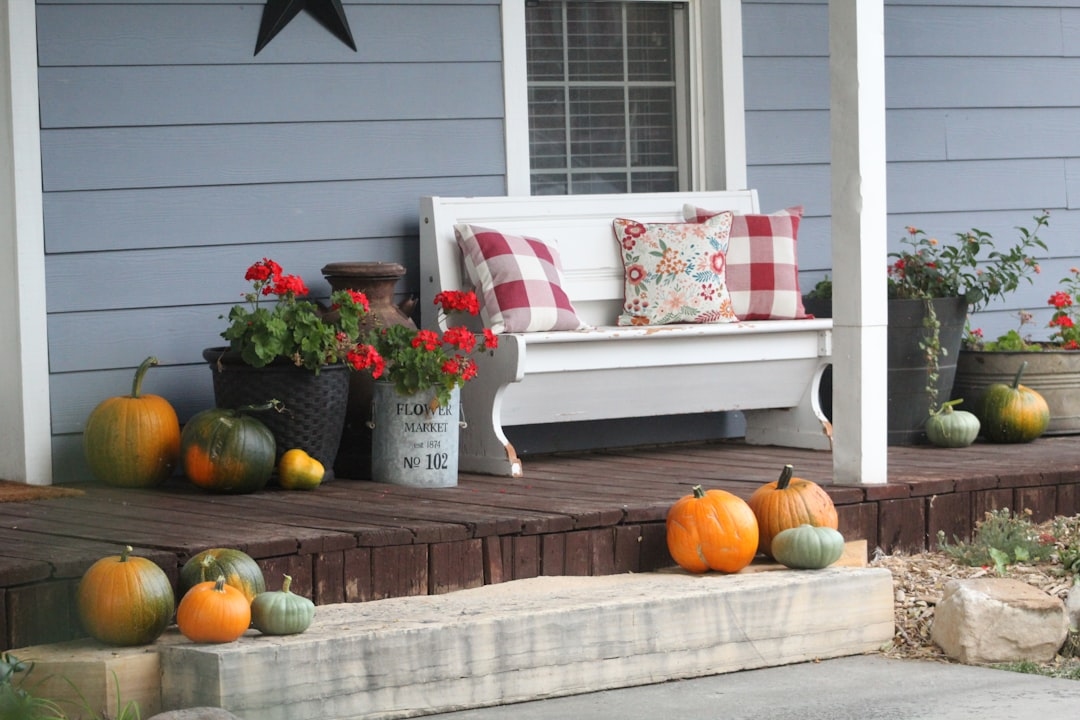
For a single-step stoop, try two identical containers flanking the door — symmetry does a lot of visual heavy lifting in tiny spaces. Matching pots with matching plants creates a polished, intentional look even when there’s barely room to turn around.
🌿 What the Pros Know
Professional floral designers always “thriller up” their containers by placing a vertical element — ornamental grass, tall asters, or even a small branch with colorful berries — behind the main flowering plant. This creates the illusion of depth and height even in a tiny 12-inch pot. It’s the single fastest way to make a grocery store mum look like a designer display.
Common Mistakes to Avoid With Fall Porch Flowers
- Buying bloomed-out mums. Mums in full, open bloom at the nursery look gorgeous but have little life left. Choose plants with mostly closed or just-opening buds — they’ll bloom for weeks longer once you get them home.
- Skipping drainage holes. Fall brings more rain in most of the US. A container without drainage turns into a soggy death trap for roots within two weeks. Always check for drainage holes, or drill them yourself.
- Planting in pots that are too small. Mums especially need space — their roots are aggressive. A 10–12 inch pot per plant is the minimum. Cramped roots mean wilting within days even with regular watering.
- Ignoring light requirements. A north-facing porch with deep shade is not the right spot for mums or asters. In low-light situations, stick to ornamental kale, which handles partial shade better than most fall bloomers.
- Watering on a summer schedule. Cooler temperatures mean soil dries more slowly. Overwatering in fall is more common than underwatering. Stick your finger 2 inches into the soil — if it’s still moist, wait another day.
A Reader Story: One Small Porch, Big Transformation
Maria, a reader from Columbus, Ohio, lived in a second-floor apartment with a 4-by-6-foot balcony she described as “basically a fire escape with aspirations.” Every fall she watched her neighbors’ porches transform while hers stayed bare. Last year, she tried three 10-inch containers: one with a deep burgundy cushion mum, one with purple ornamental kale, and one with a mix of yellow violas and trailing sweet potato vine. Total cost: around $40.
“I didn’t realize how much it would change how I felt coming home,” she said. “My neighbors started knocking to ask what I planted.” The secret wasn’t a big budget or a green thumb — it was choosing the right plants for containers and grouping them by the door where they’d get the most light. Simple, intentional, and completely achievable on a balcony the size of a king-sized bed.
Caring for Fall Porch Flowers Through the Season
Fall flowers are generally low-maintenance, but a few habits keep them looking their best deep into the season.
- Deadhead regularly. Removing spent blooms on pansies and asters encourages the plant to produce new flowers rather than setting seed. Spend two minutes every few days pinching off faded flowers and your bloom time can extend by three to four weeks.
- Fertilize lightly. A half-strength dose of balanced liquid fertilizer every two weeks keeps mums and asters producing. Don’t over-fertilize — too much nitrogen in fall encourages leafy growth at the expense of blooms.
- Protect from hard freezes. A light frost (28–32°F) won’t kill most fall bloomers, but a hard freeze (below 28°F) will. Keep an old bedsheet nearby to throw over containers on the coldest nights. This simple trick can extend your display by two to three weeks in Zones 5–6.
Frequently Asked Questions
What are the longest-lasting fall flowers for a front porch?
Garden mums and ornamental kale are the longest-lasting fall porch flowers, each holding color for six to eight weeks or more. Pansies can last even longer — sometimes through winter in Zones 7–9 — if protected from hard freezes.
What fall flowers work best in full shade?
Ornamental kale and violas tolerate partial to full shade better than most fall bloomers. In deep shade (fewer than three hours of direct sun), focus on foliage plants like caladiums (in warmer zones) or decorative gourds and pumpkins rather than flowering plants.
How many mums do I need for a front porch display?
For a small stoop or single-step entry, two large mums (one on each side of the door) create a balanced look. For a larger covered porch, use odd numbers — three or five plants — arranged at varying heights for visual interest.
Can I plant fall porch flowers in window boxes?
Absolutely. Pansies, violas, trailing sweet potato vine, and creeping Jenny all thrive in window boxes. Stick to plants with a trailing or mounding habit rather than upright growers, which can look top-heavy in a long, narrow box.
When should I put out fall flowers for my front porch?
The sweet spot is late August through mid-September in most of the US. Planting too early (while temperatures still hit the 80s) stresses fall bloomers. Waiting until October means you’ll only get four to six weeks of display before frost cuts the season short.
Make This the Year Your Porch Turns Heads
You don’t need a sprawling Victorian porch or a dedicated garden budget to pull off a stunning fall display. You need three containers, the right plant choices, and about an afternoon of your time. Start with a garden mum in your favorite fall color, add one trailing element, and build from there. Visit your local nursery in the next two weeks — the best selection of fall flowers front porch gardeners want disappears fast once September hits. Get there early, choose plants with tight buds rather than open blooms, and enjoy the season from the very best seat in the house: your own front door.