Contents:
- Understanding Cold Hardiness: What It Actually Means
- The Best Flowers That Survive Winter Outdoors
- Pansies (Viola × wittrockiana)
- Black-Eyed Susan (Rudbeckia hirta and fulgida)
- Hellebore (Helleborus spp.)
- Coneflower (Echinacea purpurea)
- Creeping Phlox (Phlox subulata)
- Ornamental Kale and Flowering Cabbage
- Hardy Perennials vs. Cold-Tolerant Annuals: A Key Distinction
- Practical Tips for Helping Flowers Survive Winter Outdoors
- A Sustainability Note: Choosing Native Cold-Hardy Flowers
- FAQ: Flowers That Survive Winter Outdoors
- What flowers can survive frost and still bloom?
- Which perennial flowers come back every year without replanting?
- Do I need to cover flowers for winter protection?
- What is the hardiest flowering plant for cold climates?
- Can flowers survive winter in containers outdoors?
- Planning Your Cold-Weather Garden: Where to Start
Some flowers don’t just tolerate winter — they thrive in it. While most gardeners assume a hard frost means a dead garden, a surprising number of flowering plants are built to endure freezing temperatures, ice, and months of dormancy, then bloom again come spring as if nothing happened. Knowing which flowers survive winter outdoors can transform a bare, brown yard into something with structure, color, and life even in the coldest months.
This guide is for complete beginners. No botanical jargon, no assumption that you already know your USDA hardiness zone (though we’ll explain that too). Just clear, specific information about cold-hardy flowers and how to give them the best chance of surviving — and returning — year after year.
Understanding Cold Hardiness: What It Actually Means
A flower’s ability to survive cold is measured using the USDA Plant Hardiness Zone Map, which divides the United States into 13 zones based on average annual minimum winter temperatures. Zone 1 covers the coldest regions (interior Alaska, down to -60°F), while Zone 13 represents the warmest tropical areas (above 60°F). Most of the continental US falls between Zones 3 and 10.
When a plant tag says “hardy to Zone 5,” it means the plant can survive minimum winter temperatures of -20°F to -10°F. That’s not a guarantee of beauty through winter — it’s a survival threshold. Some plants go dormant and look dead from November to March, then re-emerge. Others, called evergreen perennials, keep their foliage year-round.
One important distinction for beginners: annuals versus perennials. Annual flowers complete their entire life cycle in one growing season and die when temperatures drop. Perennial flowers return year after year from the same root system. If you want flowers that survive winter outdoors without replanting, you’re almost always looking for perennials — or, in some cases, hardy biennials.
The Best Flowers That Survive Winter Outdoors
The following plants are reliable cold-weather performers across a wide range of US climates. Each one has specific hardiness data so you can match it to your zone.
Pansies (Viola × wittrockiana)
Pansies are one of the few flowering plants that actively bloom in winter, not just survive it. They tolerate temperatures as low as 20°F (-6.7°C) and can bounce back from brief dips into the teens. In Zones 6 through 9, pansies planted in fall will flower through winter and into early spring. They’re commonly sold at garden centers in September and October for around $3–$6 per four-inch pot. Their flat, colorful faces — often in purple, yellow, orange, or white — make them a popular choice for window boxes and front-door containers during the colder months.
Black-Eyed Susan (Rudbeckia hirta and fulgida)
This cheerful yellow daisy-like flower is native to North America and hardy to Zone 3 (-40°F). Rudbeckia fulgida ‘Goldsturm’ is one of the most popular cultivars, reaching about 24 inches tall. The plant dies back to the ground in winter but returns reliably each spring. It also feeds overwintering birds — the seed heads left standing through winter provide food for goldfinches and chickadees, making it a low-effort choice with ecological value.
Hellebore (Helleborus spp.)
Hellebores are genuinely unusual: they bloom between December and March, depending on your location. Hardy in Zones 4 through 9, they produce nodding flowers in shades of white, pink, burgundy, and near-black. A mature hellebore plant can live for 20 years or more with minimal care. They prefer partial shade and well-drained soil. Expect to pay $10–$20 per plant at a nursery. Once established, they self-seed slowly and spread on their own.
Coneflower (Echinacea purpurea)
Coneflowers are prairie natives hardy to Zone 3. They produce purple, pink, or white blooms from June through August, and their spiky seed heads persist through winter, adding visual structure to the garden and providing food for birds. Like Black-Eyed Susans, leaving the spent stems standing rather than cutting them back in fall also supports overwintering insects — a meaningful ecological contribution for a plant that costs as little as $5–$8 per starter plant.
Creeping Phlox (Phlox subulata)
This low-growing ground cover erupts in a carpet of pink, purple, or white flowers each spring and is evergreen through winter in Zones 3 to 9. It stays under 6 inches tall but spreads up to 24 inches wide. During winter, its needle-like foliage remains green, giving the garden visible texture even when nothing is blooming. It’s especially effective on slopes and along stone walls where erosion can be an issue.
Ornamental Kale and Flowering Cabbage
Technically vegetables, but widely sold in the flowering plant section of garden centers, ornamental kale thrives in cold weather and actually becomes more colorful after frost. Its rosette of ruffled leaves in purple, pink, and white peaks in looks between October and January in most US climates. Hardy to about 5°F, it’s treated as a cool-season annual in most zones but performs as a true cold-weather ornamental through December and often into January.
Hardy Perennials vs. Cold-Tolerant Annuals: A Key Distinction
Beginners sometimes confuse cold-tolerant annuals — plants that handle frost for a few weeks before dying — with true hardy perennials that return year after year. Pansies, for example, are annuals in most US climates. They survive moderate frost beautifully, but a sustained freeze below 10°F will kill them. You replant them each season.
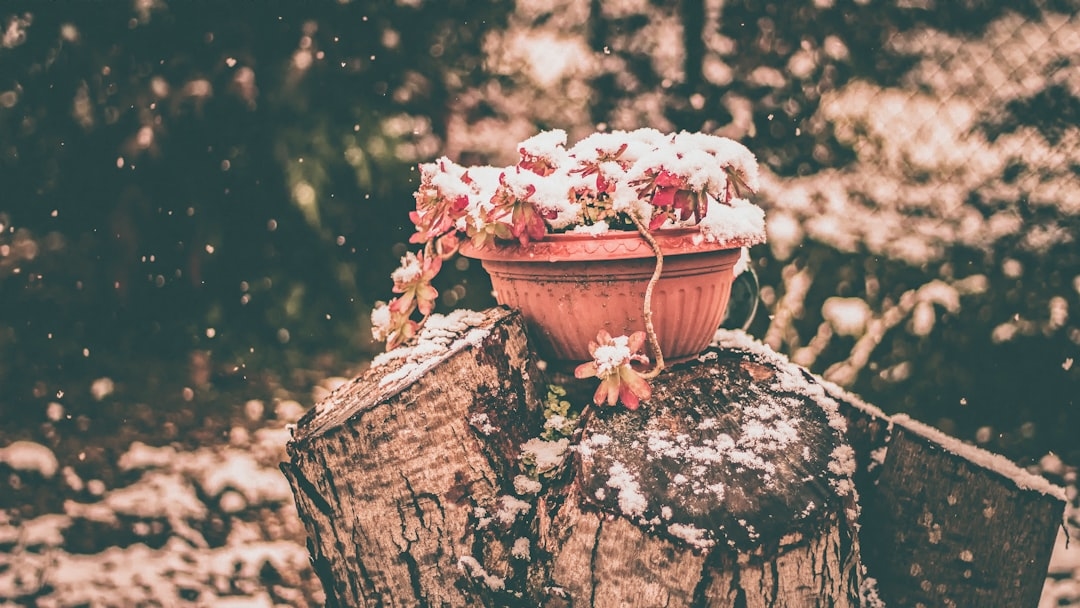
Hardy perennials like hellebores, coneflowers, and creeping phlox are a different category entirely. They survive underground through the coldest winters, requiring no replanting. This distinction matters for both your budget and your planning. A garden built on perennials costs more upfront but pays off over years. Annuals give you immediate, flexible color but are a recurring expense — typically $25–$60 per season for a small bed if purchased as transplants.
Practical Tips for Helping Flowers Survive Winter Outdoors
Even plants with strong cold hardiness ratings benefit from a little preparation before winter sets in. These steps can mean the difference between a plant that returns in spring and one that doesn’t make it through a hard freeze.
- Mulch generously. Apply 2–4 inches of organic mulch (shredded leaves, straw, or wood chips) around the base of perennials after the first hard frost. Mulch insulates roots from temperature swings rather than raw cold — it’s the freeze-thaw cycle that kills most plants, not sustained cold.
- Water before the ground freezes. A deep watering in late fall helps plants enter dormancy with adequate moisture. Dry roots are more vulnerable to winter damage than hydrated ones.
- Leave seed heads standing. Resist the urge to cut everything back to the ground in fall. Hollow stems and seed heads shelter native bees and other beneficial insects through winter. This is also the most sustainable approach to garden cleanup — less labor, more ecological benefit.
- Avoid late-season fertilizing. Fertilizing in late summer or fall encourages soft new growth that’s highly vulnerable to frost damage. Stop fertilizing flowering perennials by mid-August in most US zones.
- Know your microclimate. A south-facing bed next to a brick wall can be a full zone warmer than an exposed north-facing bed in the same yard. Use these warmer pockets to push the limits of what’s rated for your zone.
A Sustainability Note: Choosing Native Cold-Hardy Flowers
Many of the best flowers for surviving winter outdoors are also native to North America — and that matters beyond aesthetics. Native plants like coneflowers, black-eyed Susans, and native asters evolved alongside local insects, birds, and soil ecosystems. They require less water, fewer pesticides, and no fertilizer once established. A patch of native cold-hardy perennials supports pollinators and overwintering wildlife while requiring almost nothing from you after the first season. The National Wildlife Federation estimates that replacing even 10% of a conventional lawn with native plantings meaningfully increases local biodiversity. Starting with hardy native flowers is one of the simplest ways to garden more sustainably without sacrificing beauty.
FAQ: Flowers That Survive Winter Outdoors
What flowers can survive frost and still bloom?
Pansies, hellebores, and ornamental kale are among the few plants that actively bloom during frost and cold winter temperatures. Hellebores, in particular, flower from December through March in Zones 4–9, making them one of the most reliable cold-season bloomers available.
Which perennial flowers come back every year without replanting?
Coneflowers (Echinacea), black-eyed Susans (Rudbeckia), creeping phlox, and hellebores are all perennial flowers that return each year from the same root system. Most are hardy to at least Zone 4 (-30°F).
Do I need to cover flowers for winter protection?
For plants rated for your zone, covering is usually unnecessary. However, applying 2–4 inches of mulch over the root zone after the first hard frost significantly improves survival rates, especially for plants at the edge of their hardiness range or in areas with unpredictable freeze-thaw cycles.
What is the hardiest flowering plant for cold climates?
Creeping phlox and black-eyed Susans are both hardy to Zone 3 (-40°F), making them among the most cold-tolerant flowering plants for US gardens. Both are widely available and require minimal care once established.
Can flowers survive winter in containers outdoors?
Container plants are more vulnerable than in-ground plants because their roots have no insulation from surrounding soil. To overwinter flowers in containers, choose plants rated at least one zone colder than your actual zone, and move containers against a sheltered wall or wrap them in burlap to protect roots from hard freezes.
Planning Your Cold-Weather Garden: Where to Start
If you’ve never grown flowers before, the easiest entry point is a single raised bed or a small front-border planting using two or three perennial species suited to your zone. Look up your USDA hardiness zone at the USDA’s official zone map (available free online), then choose plants rated two zones colder than your zone for maximum reliability. Start with coneflowers and creeping phlox as your foundation — both are nearly indestructible, widely sold, and attract pollinators from spring through late fall. Add pansies each September for winter color in the gaps.
Flowers that survive winter outdoors don’t require expertise. They require the right plant in the right place. Once you have that match, winter stops being the end of your garden and starts being just another season it moves through.